
Capacity Through Partnership: Marquette County Land Bank and Planning Co-Host CED Corp Member
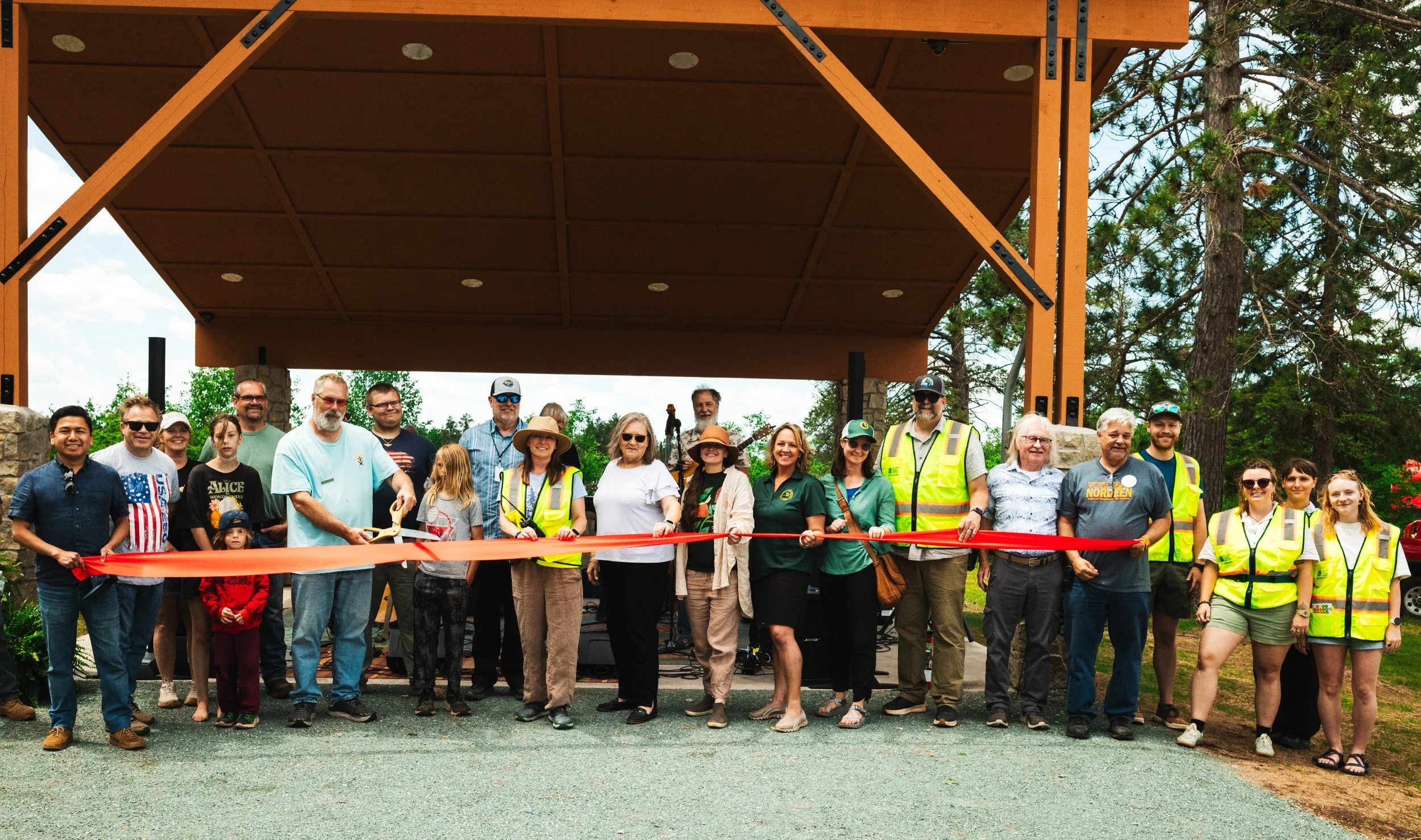
Marquette County Planning, Marquette County Land Bank, and others participate in the 2026 Ribbon Cutting for Little Trout Lake Park in Forsyth Township
FYI: This post is part of a new series focusing on the power of partnership to build land bank capacity across Michigan. If you have a story to share, please submit your idea here and we’ll be in touch.
Moving a community’s housing and redevelopment goals forward takes properties, local knowledge, and people with time to follow through. In Marquette County, an established partnership between the Land Bank Authority and County Planning Division is bringing those resources together—and adding a new one: a CEDAM AmeriCorps CED Corps member who will help advance their shared work in 2026–2027.
Marquette County is one of ten host sites selected for the program. The Planning Division is the applicant and primary host, with the Land Bank Authority as its principal partner. Both will supervise and mentor the member, and the County and Land Bank will share the local host contribution. For the partners, the placement is an opportunity to give locally identified housing and community development priorities more dedicated attention.
Bringing Complementary Resources Together
The placement builds on resources both organizations already bring to the work. The Marquette County Land Bank Authority contributes property and housing redevelopment experience, an active project pipeline, and relationships with developers and project partners. Planning brings countywide planning and community development expertise, along with experience in grant development and administration, community engagement, and data and mapping. Its established relationships with municipalities, organizations, and residents support that work.
Community plans and resident input help identify housing needs and development priorities. The Land Bank’s property expertise and redevelopment tools help translate those priorities into potential projects. Together, the partners can assess sites, coordinate people and resources, and prepare projects for funding and development.
With the new member in place, the partners will establish assignments and review progress together. CED Corps is offered by the Community Economic Development Association of Michigan (CEDAM) in partnership with the Michigan Economic Development Corporation and Michigan Community Service Commission.
Planning also brings a foundation for hosting the member. The Division has hosted three cohorts of MI Healthy Climate Fellows, investing in office infrastructure and equipment and establishing a framework for supervision and mentoring. These existing resources reduce startup needs and allow the partners to direct more of their resources toward the work itself.
The County and Land Bank Authority are sharing the local host contribution. That financial commitment covers only a small portion of the placement’s full value, allowing the partners to bring substantially more capacity to shared priorities than the contribution alone could purchase. Their investment pairs financial resources with staff expertise and project opportunities.
The member will support a jointly developed work program, with regular guidance from both organizations. Responsibilities and deliverables will be documented to help projects continue beyond the service term.
“The Land Bank spent considerable time last summer identifying publicly owned land and meeting with municipal leaders. This year, working closely with our County Planning Division has opened new doors to communities that have not been a priority in the past. We want to build on the work our planners and municipal leaders have been tackling in K.I. Sawyer, Gwinn, Ishpeming, and the west end of the County. Without this resource from CEDAM, our capacity to assist communities with blight elimination, predevelopment, and new housing construction is limited,” said [NAME], Executive Director of the Marquette County Land Bank Authority. [Edited quote for speaker approval.]
Connecting Properties With Community Priorities
That added capacity will be put to work around a shared priority: housing. The member will inventory and assess priority properties, prepare project profiles, research funding, and coordinate predevelopment partners. Rehabilitation and infill opportunities are part of the proposed work, with the goal of moving attainable and workforce housing projects toward implementation. Local needs and community input will help guide those efforts.
The work extends beyond individual properties. Through the shared work program, the partners plan to collaborate with interested cities and townships on development opportunities, Redevelopment Ready Communities practices, local incentives, and emerging funding resources. Accessible information and project discussions will help communities prepare for relevant opportunities. Engagement with residents and local leaders will keep the work grounded in community priorities.
“Through our master planning and community engagement work, we have heard loudly that housing availability is a major concern across the County. The Planning Division brings experience identifying and connecting community priorities with plans and public investments. The Land Bank brings the property and redevelopment expertise to help advance housing opportunities. Working together gives us more capacity to follow through on those priorities and connect housing with the places and services that support daily life,” said Thyra Karlstrom, who leads the Marquette County Planning Division.
K.I. Sawyer illustrates how planning and implementation connect. The Planning Division has advanced community-identified priorities through improvements to Little Trout Lake Park, public access to outdoor recreation, and the Silver Lead Creek Greenway and related trail network. The shared member will help sustain this work through community programming, resident engagement, partner coordination, and stewardship. Housing and redevelopment efforts can build on these public investments, strengthening connections among neighborhoods, community spaces, and local opportunities.
“Partnerships create opportunity when each organization brings its strengths to shared priorities. By combining the Land Bank’s redevelopment tools with the Planning Division’s expertise and community connections, Marquette County is adding capacity to turn local goals into projects. That work can create new economic opportunities for residents across the County—from housing that helps people live near their jobs to redevelopment that creates space for businesses and community investment,” said Natalie Chmiko, CEO of the Lake Superior Community Partnership. [Proposed quote for Natalie’s review and approval.]
An Approach Other Land Banks Can Adapt
Marquette County’s approach offers other land banks a practical lesson: the resources needed to move a project forward may be spread across several local organizations. Look at where your work intersects with a planning office’s priorities, an economic development organization’s activities, or a municipality’s land reuse strategies. Agree on how to share resources and responsibility. Added capacity can then help advance those projects and give partners more time to engage residents and local leaders.
In Marquette County, the partners are also planning for what comes after the placement. Property and project inventories, including publicly owned land, will sit alongside implementation trackers, grant and funding materials, and handoff documents identifying next steps and responsible partners. Public engagement will inform the work. These tools are intended to sustain progress after the member’s service term ends.
For a land bank considering a similar partnership, the gap to fill may look different. Dedicated staff time or specialized expertise may be the priority; elsewhere, better project information, stronger development processes, or help with implementation and follow-through may make the difference.
Start with one project or recurring development barrier. What does the community want to accomplish? Consider what the land bank can contribute and which local government, planning, or economic development partners bring complementary capabilities. Agree on roles, resources, deliverables, and the additional help needed to move forward. Those decisions can turn shared interests into a workable project and a stronger case for staff support, technical assistance, or funding.
In Marquette County, the Land Bank’s redevelopment tools, project pipeline, and relationships complement the Planning Division’s grant expertise, community connections, and established hosting infrastructure. Together, those resources give the partners a foundation for bringing additional capacity to locally identified priorities. The aim is to advance today’s projects while leaving communities and local partners better prepared for the next opportunity.
Resources to Explore
Once partners have identified the capacity or project support they need, several resources are worth exploring together. MEDC’s Redevelopment Ready Communities program offers municipalities guidance on planning, zoning, and development processes, with technical assistance match funding available to eligible communities. Rural partners can also look to the Michigan Office of Rural Prosperity’s Rural Readiness Program for training, technical assistance, connections to resource providers, and grant support for capacity building and partnership formation. For land banking and vacant property reuse strategies, the Center for Community Progress provides technical assistance, including help with property data.
Housing projects may find a fit through the Michigan State Housing Development Authority’s MI Neighborhood program, which supports rehabilitation and new construction. The State Land Bank Authority has also administered Blight Elimination Program funding for demolition, stabilization, environmental remediation, and rehabilitation of publicly owned structures. Availability and eligibility matter. Partners should check both with the relevant agency and choose resources that address the gap they need to fill.
Office of Rural Prosperity Rural Readiness Program
Center for Community Progress/ National Land Bank Network
MSHDA MI Neighborhood
